
On 25 November 2026, the First Nations Eye Health Alliance (FNEHA) was at Parliament House in Canberra to seek cross-party support for a dedicated inquiry by the Joint Standing Committee on Aboriginal and Torres Strait Islander Affairs.
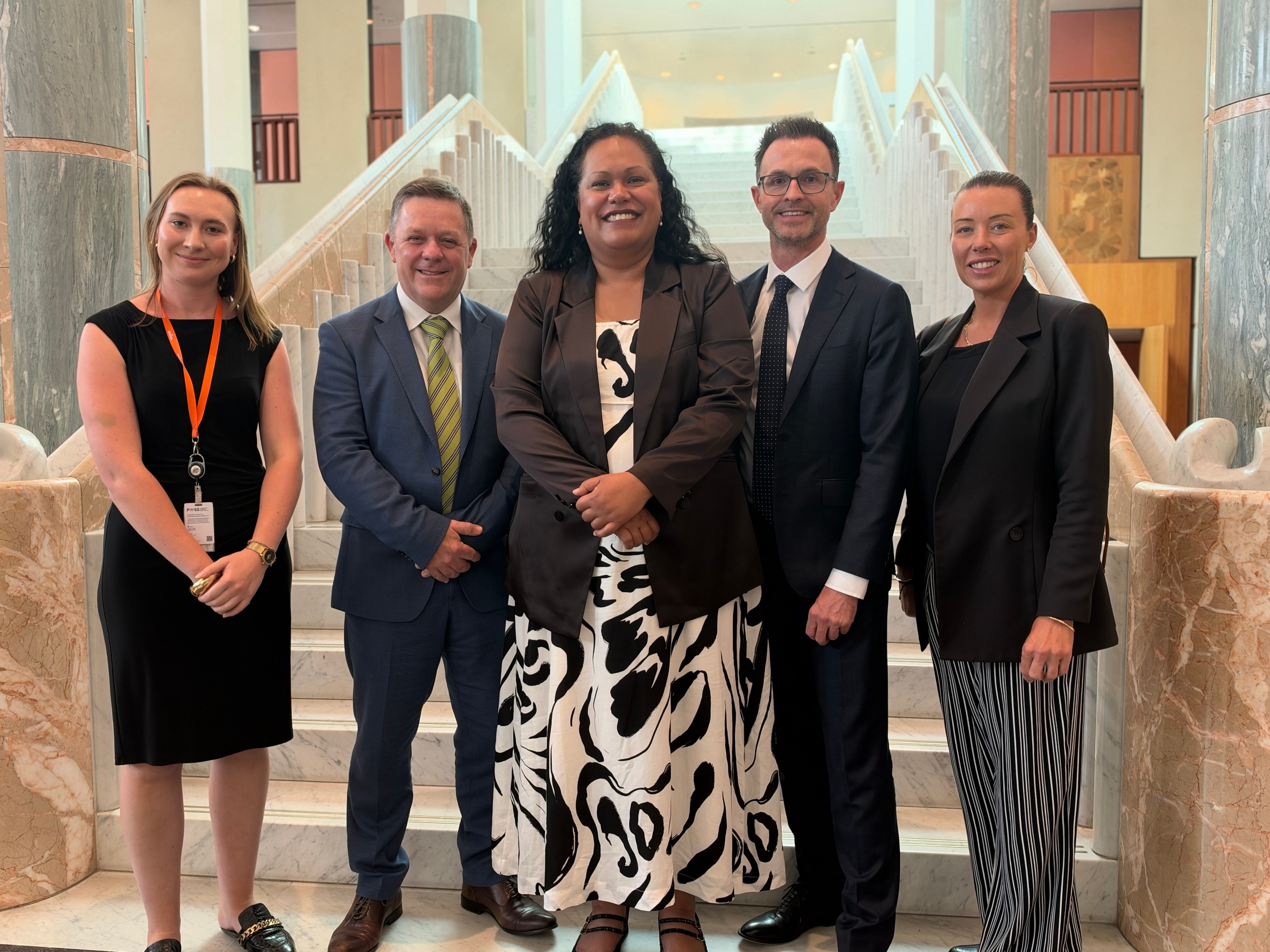
FNEHA Chief Executive Officer Lose Fonua led the delegation, joined by The Fred Hollows Foundation Chief Executive Officer Ross Piper, Optometry Australia Chief Executive Officer Mark Nevin and Delta Advisory Associate Director Mia Linden. As Australia's national Aboriginal and Torres Strait Islander community-controlled peak body for eye health and vision care, FNEHA brings community and member priorities into national policy, advocacy and sector coordination.
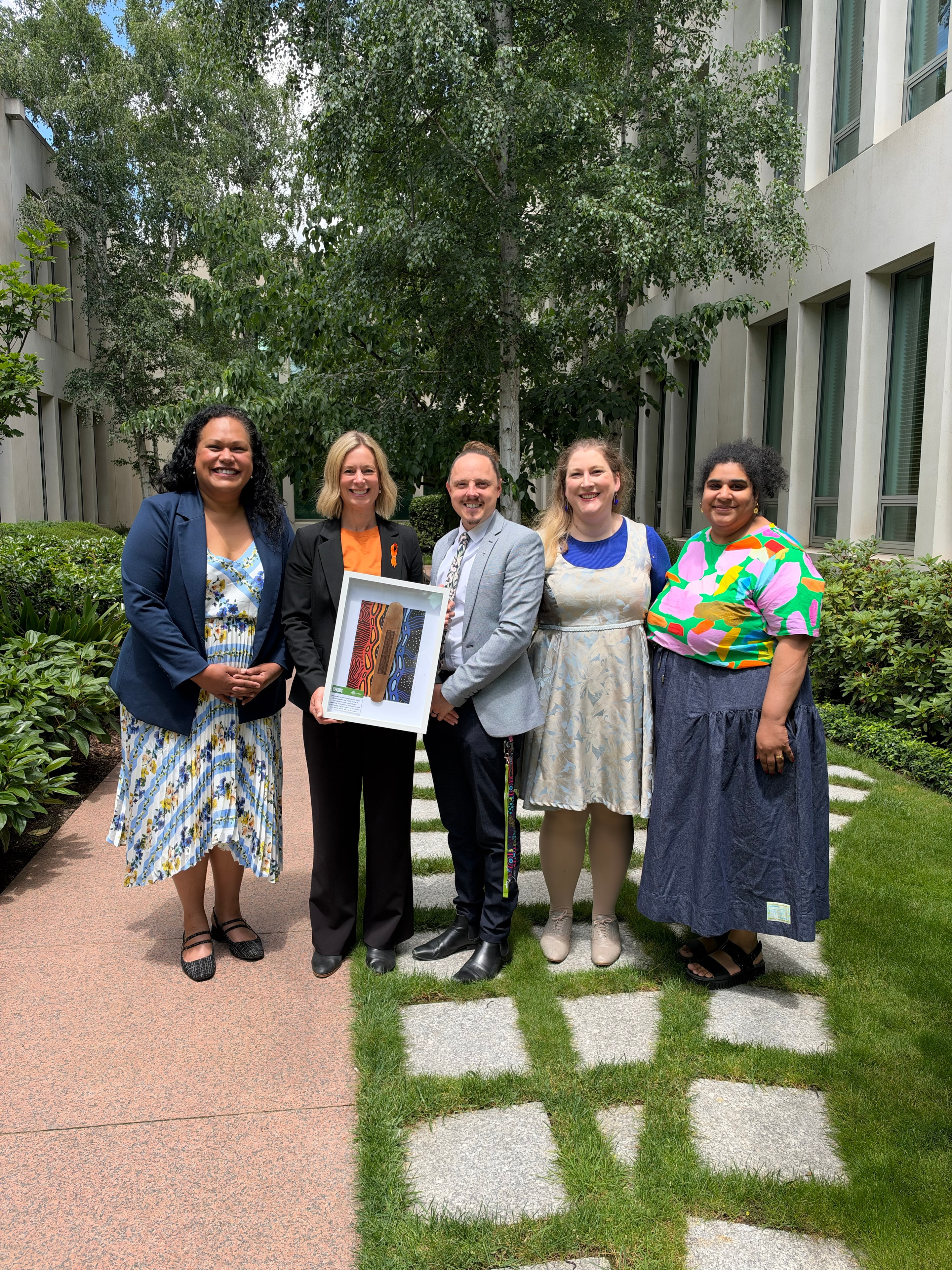
On 24 November, Lose met with the Hon Rebecca White MP, Assistant Minister for Health and Aged Care, Assistant Minister for Indigenous Health and Assistant Minister for Women. Lose presented an award recognising the Australian Government's contribution to eliminating trachoma as a public health problem. They also discussed the proposed inquiry and FNEHA's priorities for the 2027–28 Commonwealth Budget.
The Canberra program also included meetings with Commonwealth agencies responsible for national health data and evidence, Indigenous affairs and Closing the Gap. These engagements reflect FNEHA's commitment to strengthening relationships across government and advancing long-term, sustainable systems reform to improve eye health and vision care outcomes for Aboriginal and Torres Strait Islander peoples.
FNEHA extends its thanks to the parliamentarians, advisers, officials and sector colleagues who contributed to these important discussions. We also thank Optometry Australia and The Fred Hollows Foundation for joining us in Canberra and supporting our advocacy for Aboriginal and Torres Strait Islander eye health and vision care.
The proposed inquiry would examine the lived experience of Aboriginal and Torres Strait Islander peoples in accessing eye health and vision care, including barriers to timely, equitable and culturally safe care. It would also examine the outcomes of previous initiatives, what has improved access to and completion of care, and the roles and accountability of governments and service partners in addressing remaining gaps.
In its 2027–28 Commonwealth Pre-Budget Submission, FNEHA calls on the Australian Government to fund three linked investments that can progress alongside the proposed inquiry.
- Resource FNEHA to participate as an equal partner in national eye health decisions. Provide four-year foundation funding and establish a formal partnership with the Commonwealth, consistent with Priority Reforms One and Two of the National Agreement on Closing the Gap.
- Fund the first four years of National Plan implementation. FNEHA would act as national steward and implementation lead for the National Aboriginal and Torres Strait Islander Eye Health Plan 2027–2037.
- Provide free prescription glasses for Aboriginal and Torres Strait Islander children. The proposal sets out a nationally consistent, First Nations-led approach delivered through partnerships with Aboriginal Community Controlled Health Organisations and eye care providers.
At the 2026 Global Summit for Eye Health, the Australian Government committed to improving vision in Aboriginal and Torres Strait Islander people by closing the eye health and vision gap for Aboriginal and Torres Strait Islander peoples by 2035 and sustaining Australia's elimination of trachoma as a public health problem. FNEHA is calling for funded action on these commitments.
Further reading
- Fonua, L., Niyazmand, H., Trinh, H., Bailey, I., & Alam, K. (2026). Understanding a decade of progress in preventing vision loss among Aboriginal and Torres Strait Islander communities across Australia. Clinical and Experimental Optometry.
- Australian Institute of Health and Welfare. Eye health measures for Aboriginal and Torres Strait Islander people 2025.
- The University of Melbourne. Evaluating the progress and effectiveness of regional implementation of the Roadmap to Close the Gap for Vision (summary report).
- Parliament of Australia. Joint Standing Committee on Aboriginal and Torres Strait Islander Affairs.
- Closing the Gap. Priority Reforms under the National Agreement on Closing the Gap.
- Australian Government. National Aboriginal and Torres Strait Islander Health Plan 2021–2031.
- First Nations Eye Health Alliance. National Aboriginal and Torres Strait Islander Eye Health Plan 2027–2037.
- Australian Government. Commitment statement at the Global Summit for Eye Health.
- First Nations Eye Health Alliance. Eye health pledge must now be backed by funding and First Nations leadership.